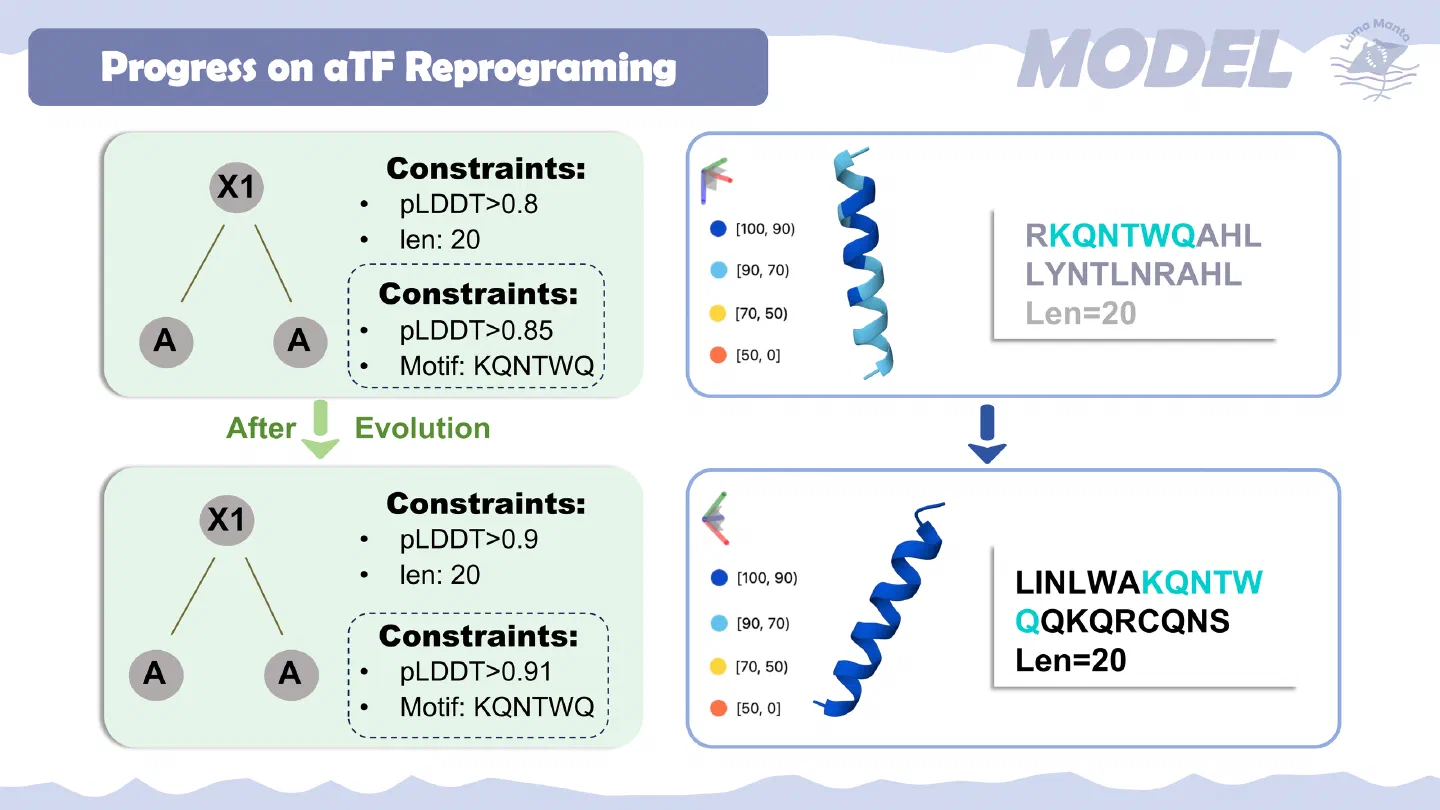
LumaManta — Programmable Biosensing for Water Monitoring
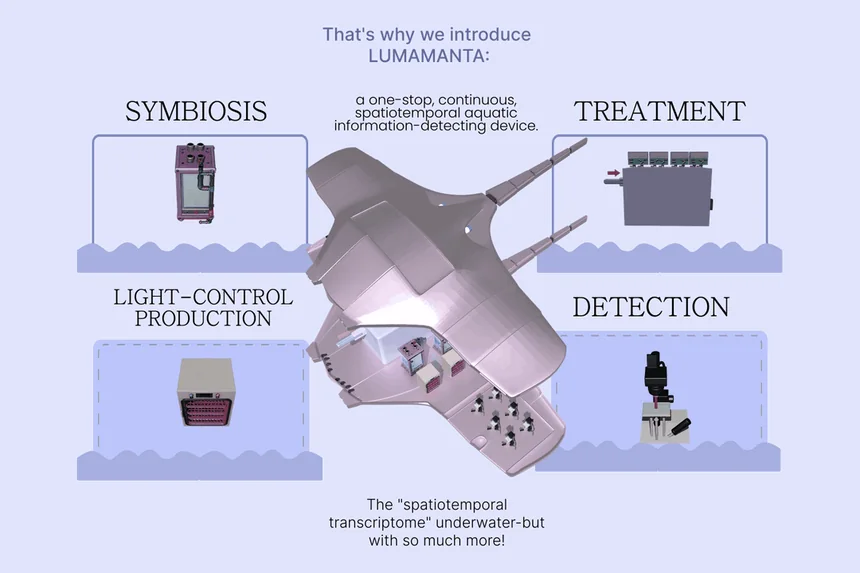
Background
LumaManta was ZJU-China’s entry to iGEM 2025 — the International Genetically Engineered Machine competition, the largest synthetic-biology contest for university teams, judged each year at the Grand Jamboree in Paris.
Monitoring water for pollutants and environmental DNA (eDNA) usually means collecting samples and sending them to a lab. An all-in-one device that senses in real time has to solve a harder problem than any single biosensor does: one platform needs to report on several different targets without carrying a separate genetic circuit for each.
Method
As Technical Lead I coordinated a 14-member interdisciplinary team spanning wet lab, dry lab, hardware, and software.
The core of the design is BiChromaLogic, a light-controlled genetic circuit built on CRISPR-based logic gates. It takes 2 light inputs and converts them into 4 distinct sensor proteins on demand — so the device can be reprogrammed for a target by changing illumination rather than by rebuilding the biology.
Tools and techniques: CRISPR-i/a, optogenetics, confocal microscopy, Python, R, GROMACS, AlphaFold3.
Genetic circuit
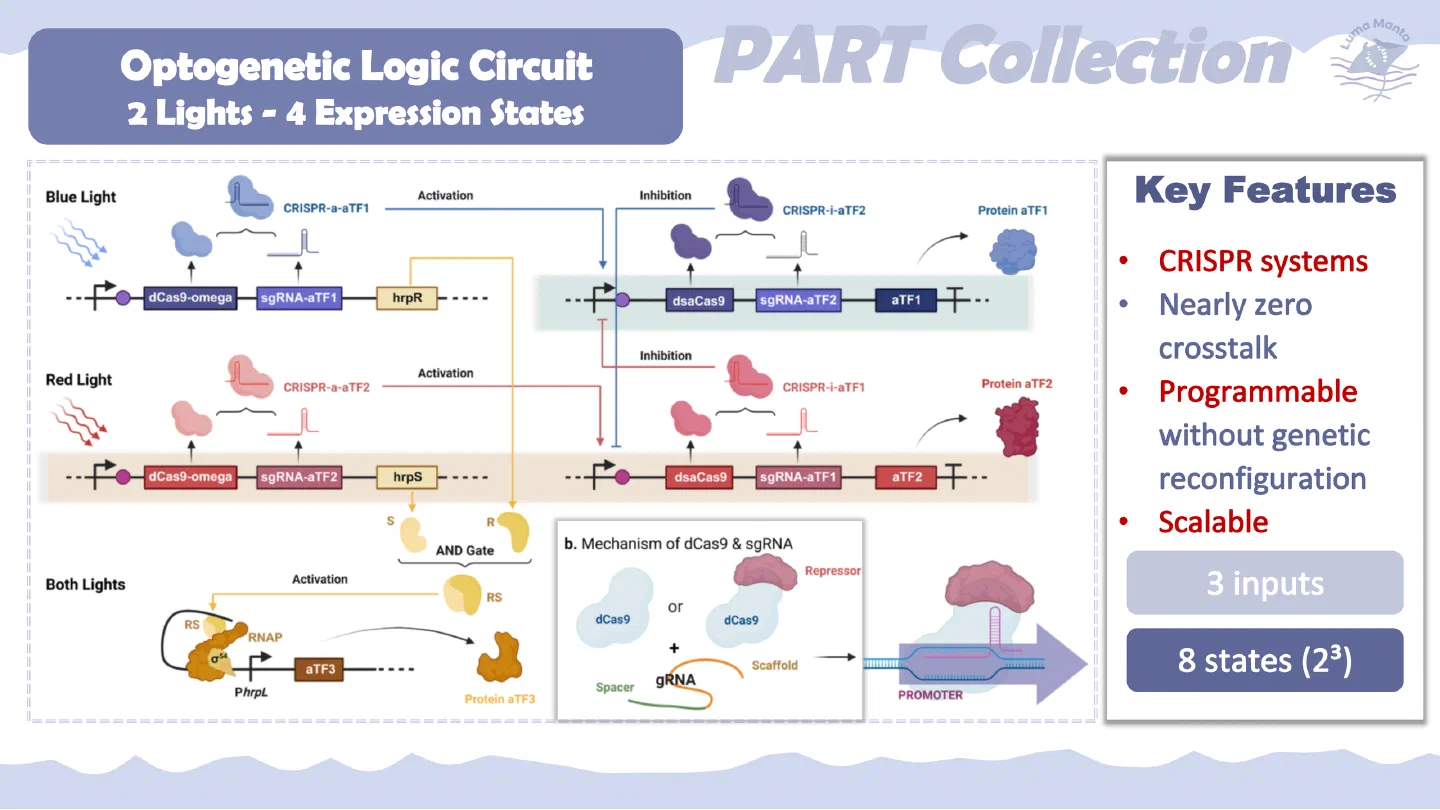
Wet lab
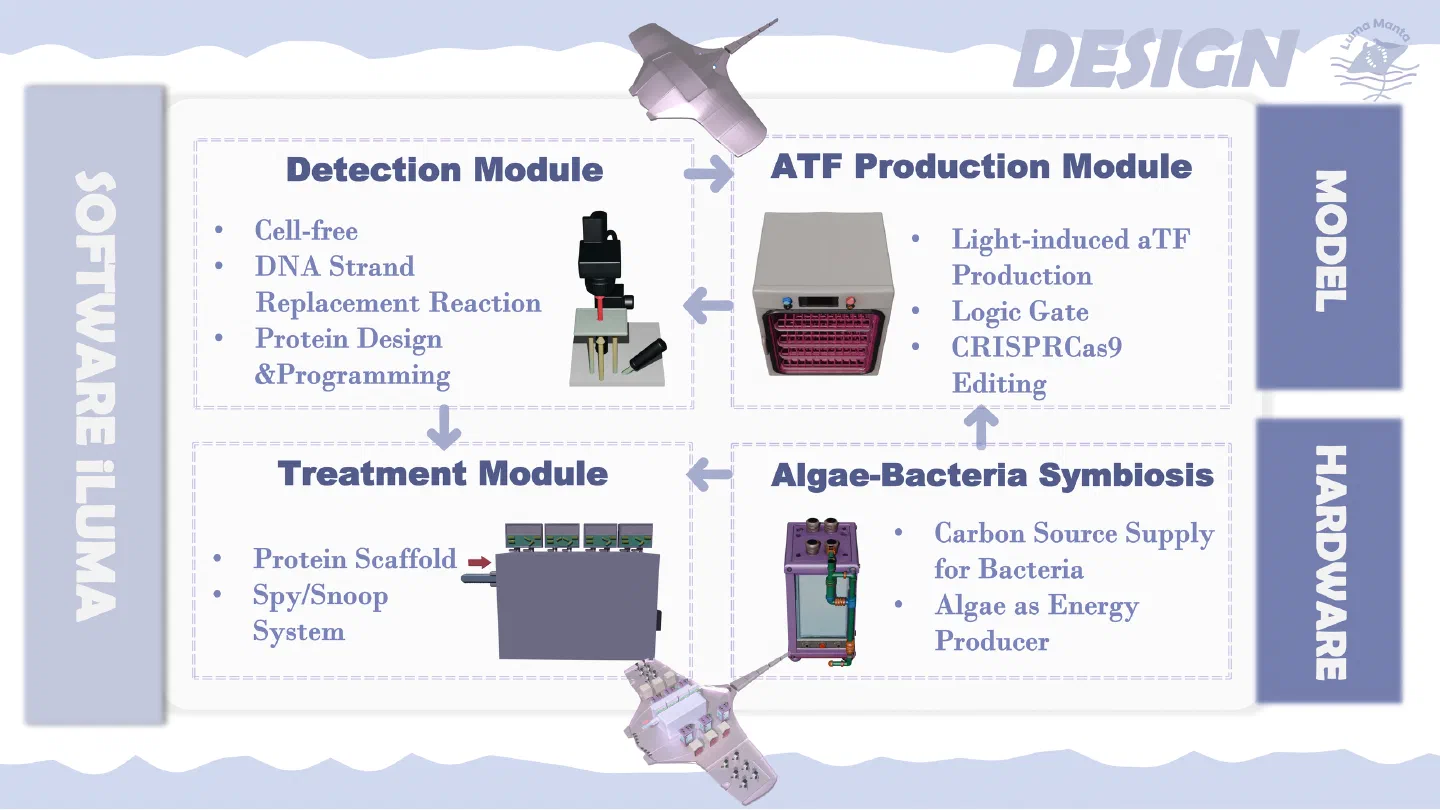
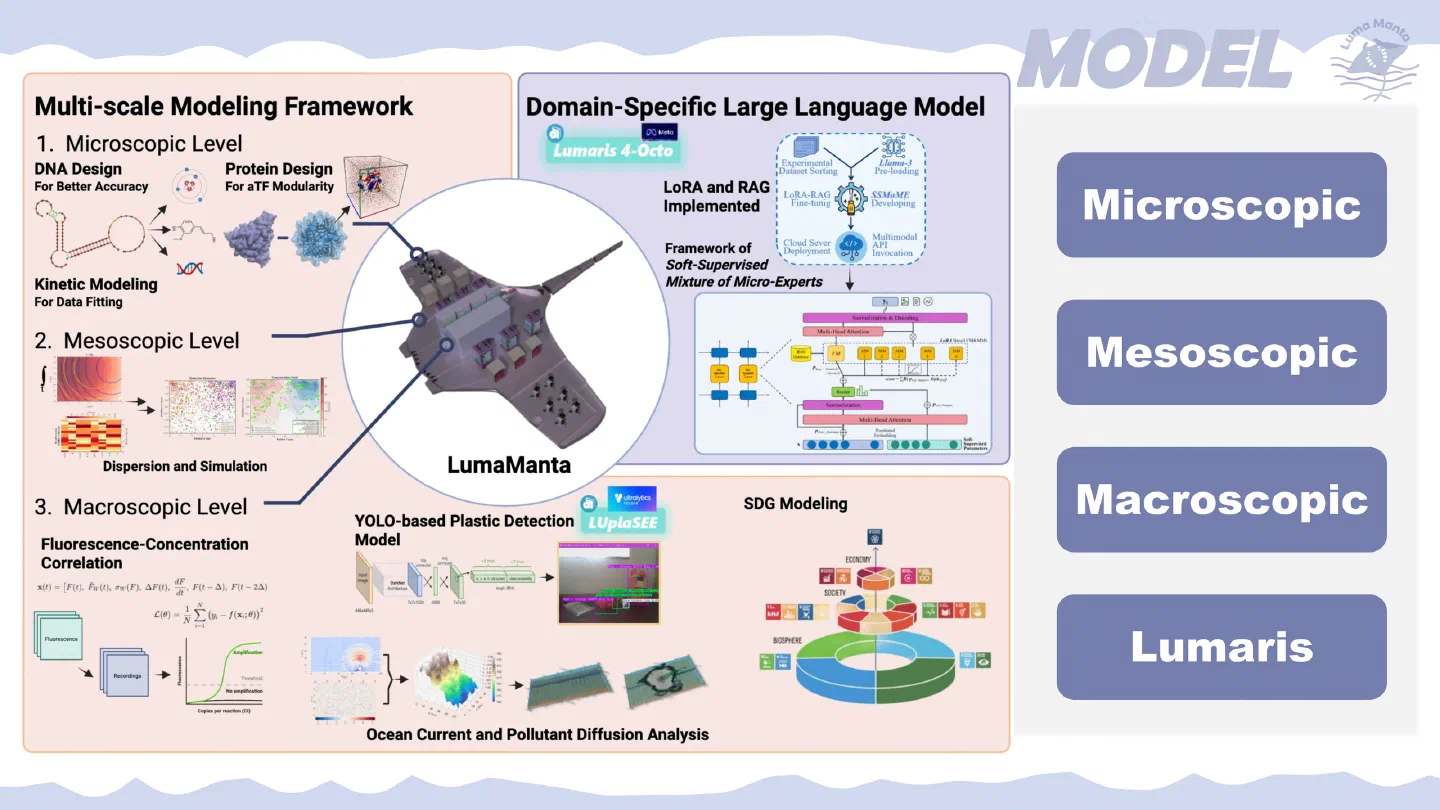
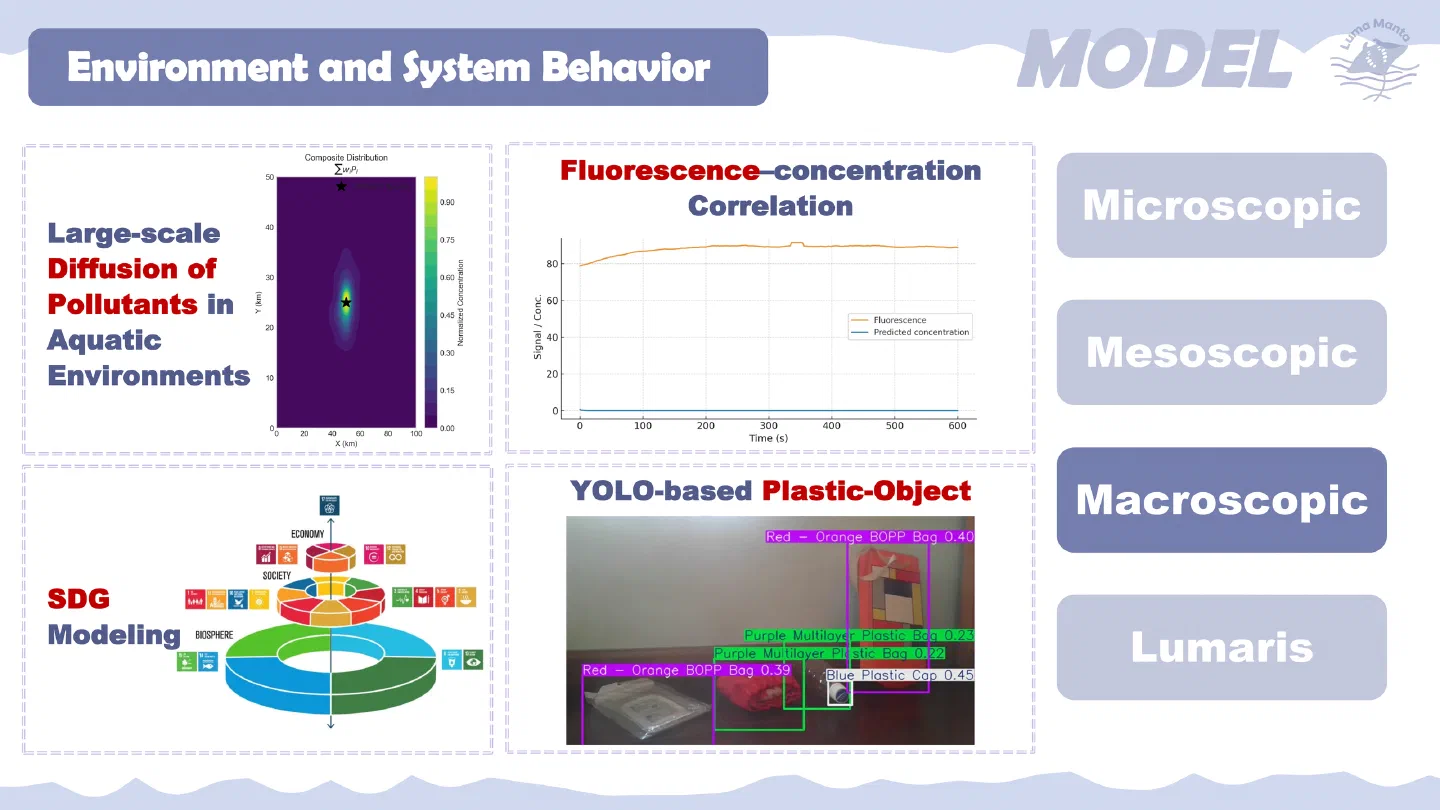
Modelling


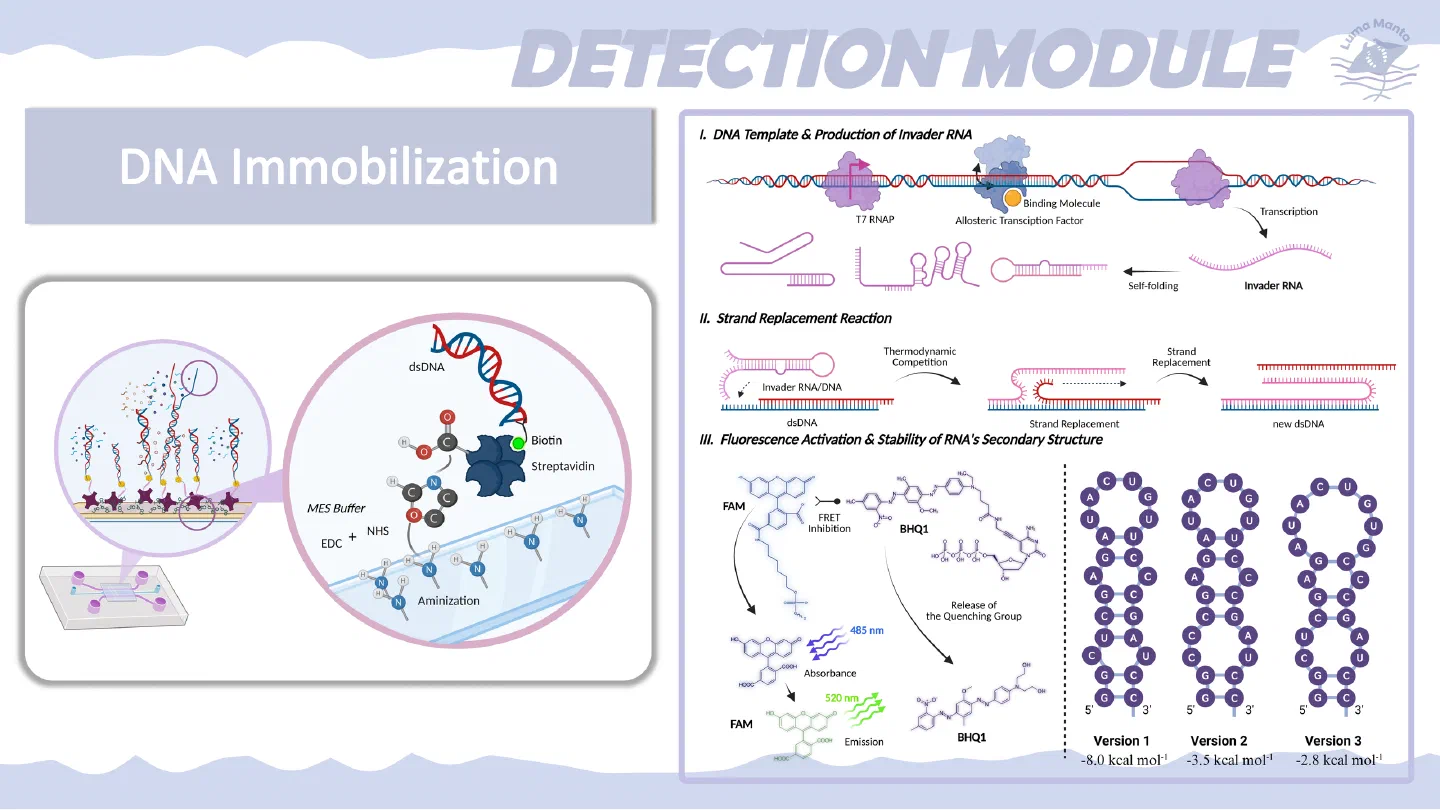
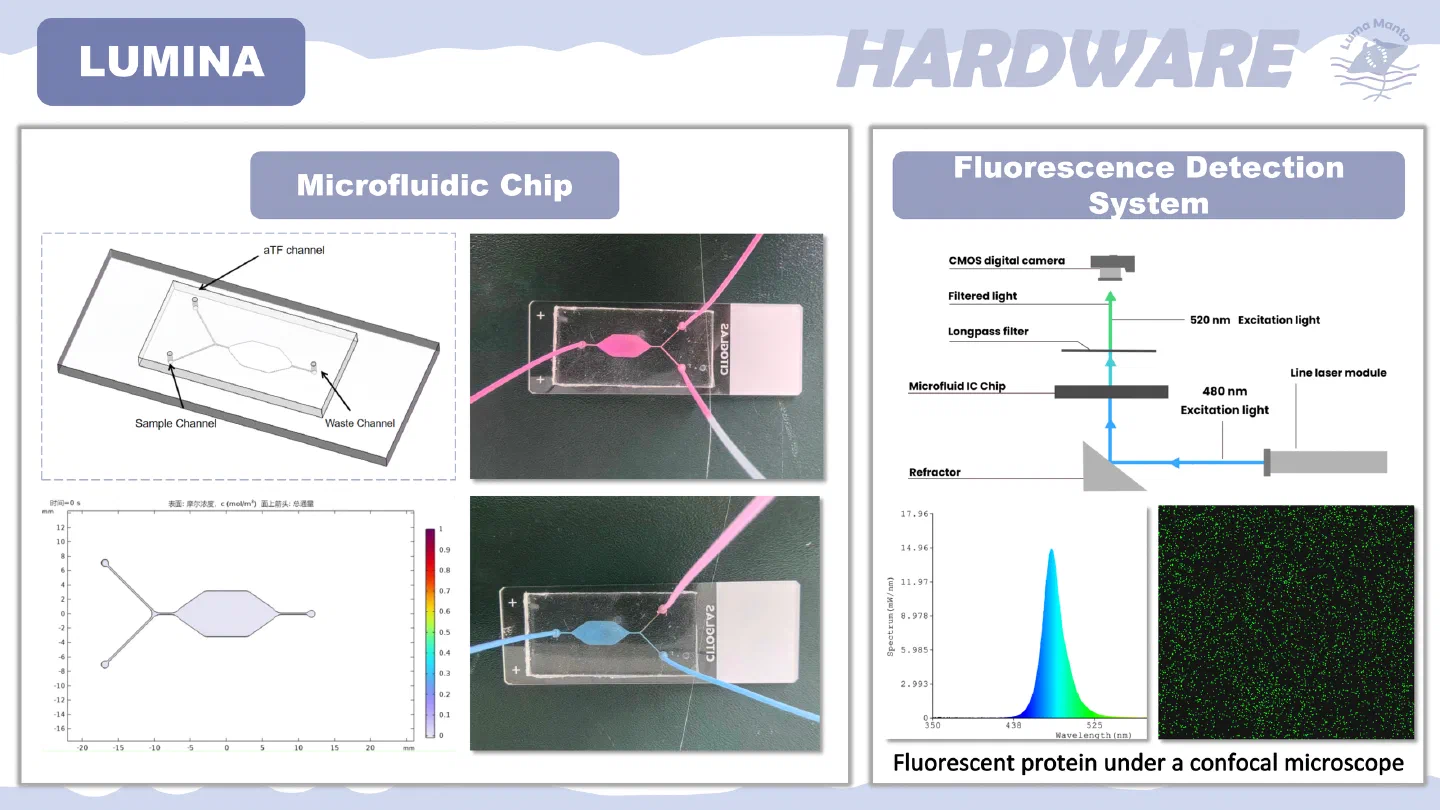
Detection module
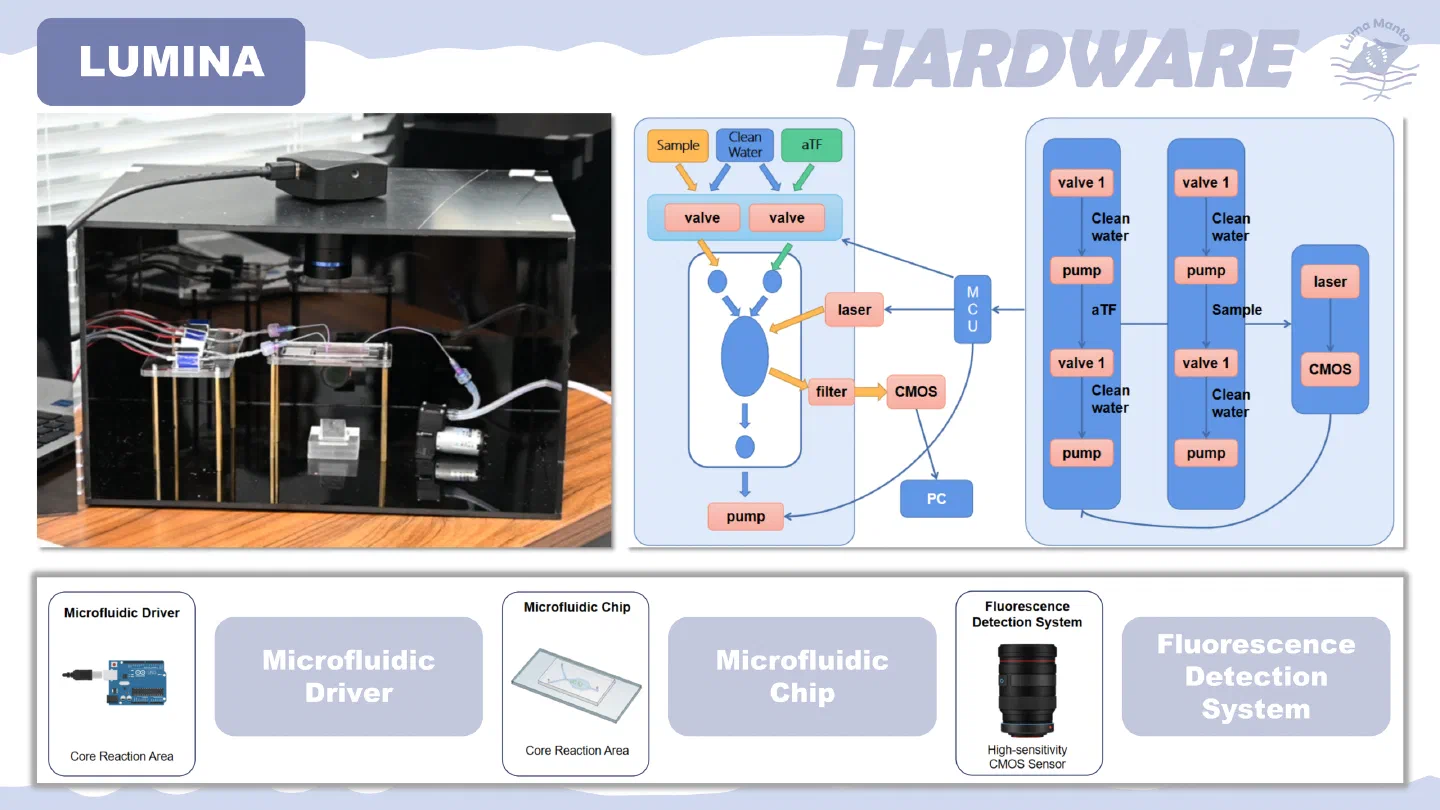
Hardware
Results
- Circuit performance: 169% activation and 92% repression efficiency across the logic gates.
- Competition outcome: Silver Medal at iGEM 2025 as ZJU-China.
- The work also became the basis of an eDNA-based aquatic pathogen detection entry that took a Gold Medal at Zhejiang University’s 18th “Dandelion” Undergraduate Innovation Competition.