A Sustainable Pigment Biosynthesis System

Background
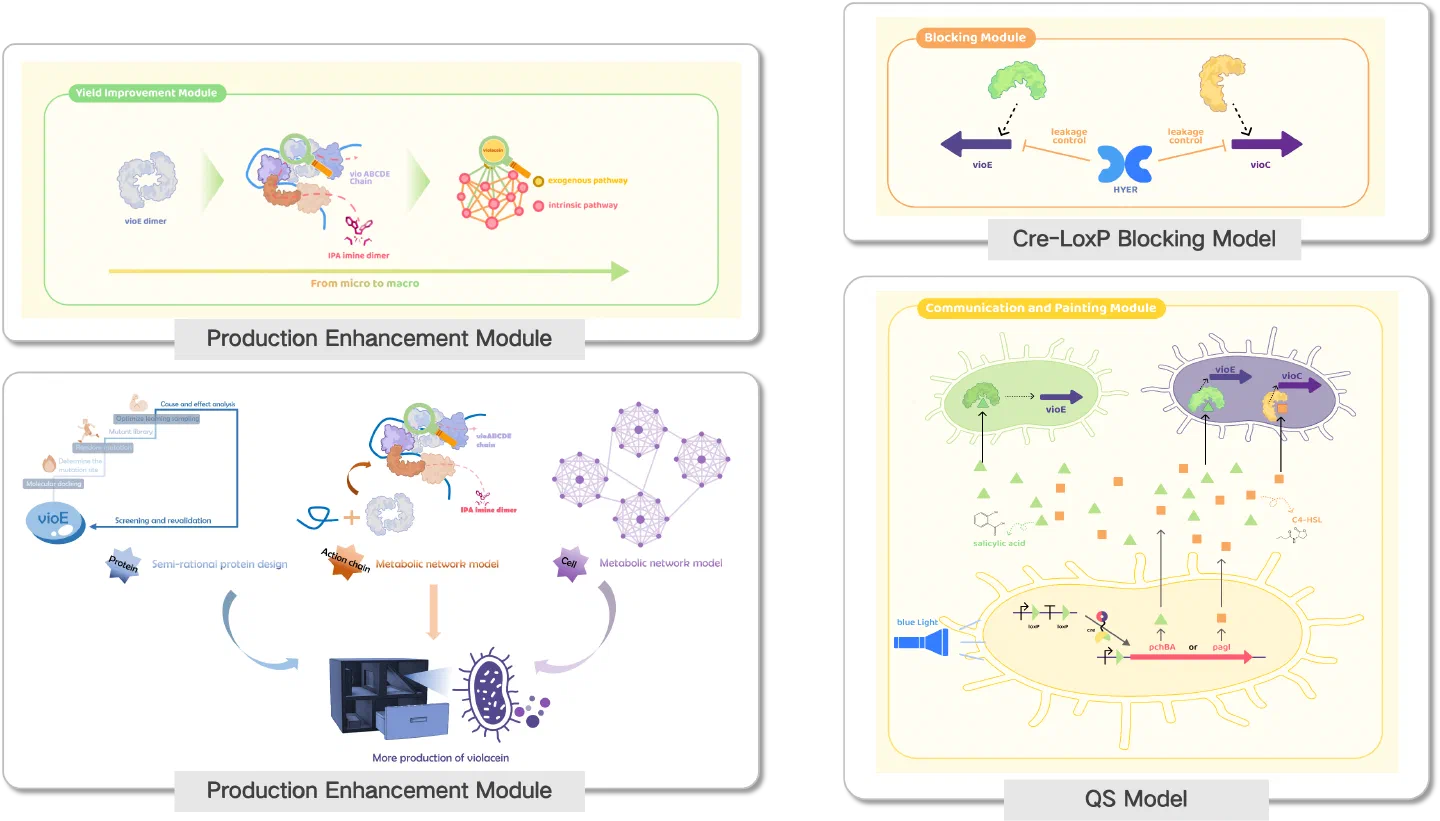
Microbial pigment production offers a route away from petrochemical dyes, but it has to clear two bars at once: the pathway must be productive enough to be worth running, and the output must be controllable rather than constitutive.
This Provincial SRTP grant project addressed both — enzyme and flux engineering for yield, and genetic circuit design for control.
Method
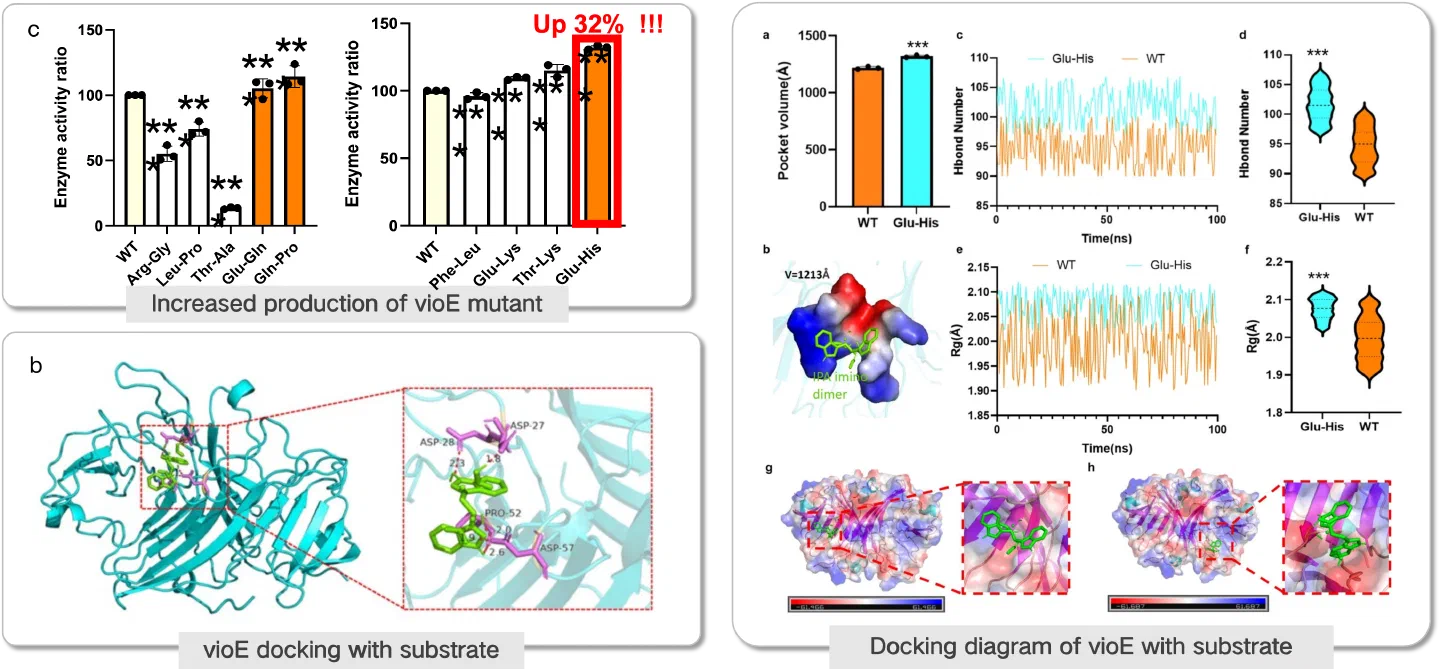
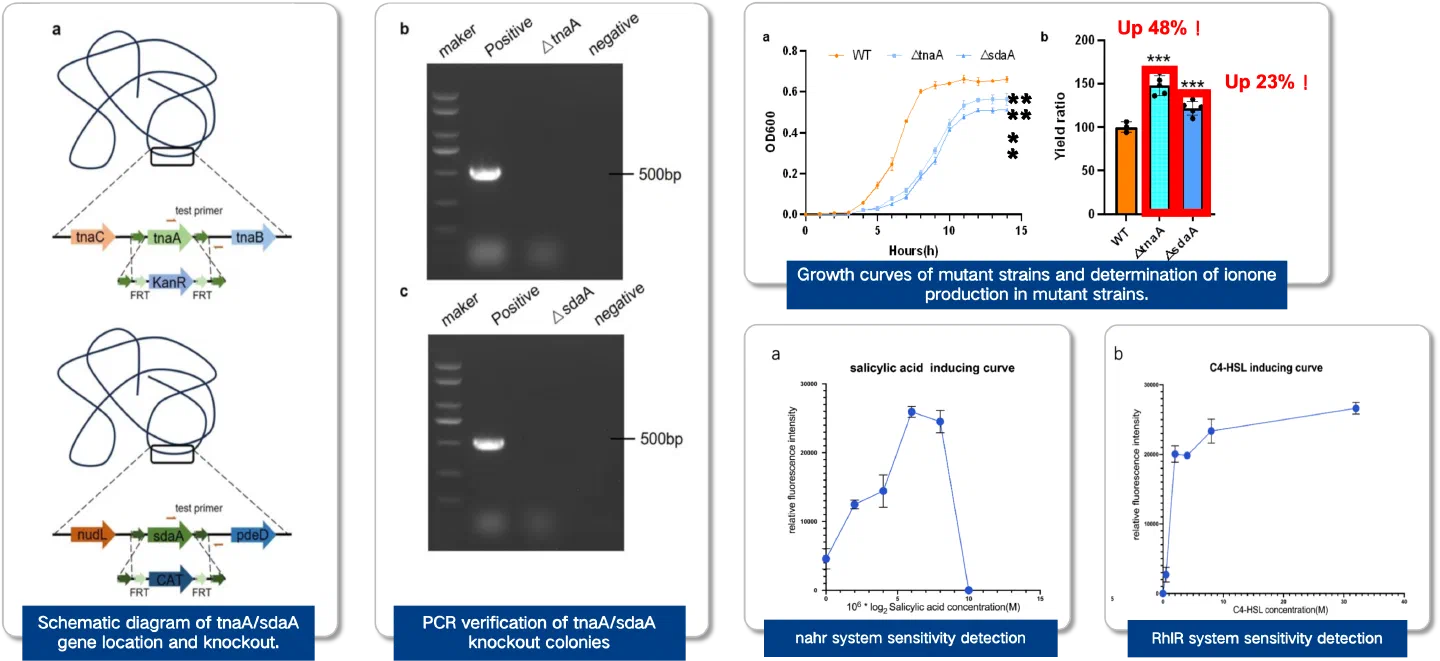
Enzyme and metabolic engineering. Semi-rational design combined with MD simulation was used to improve the pathway enzyme vioE, while genome-scale metabolic modelling (GSMM) identified knockout targets to redirect flux.
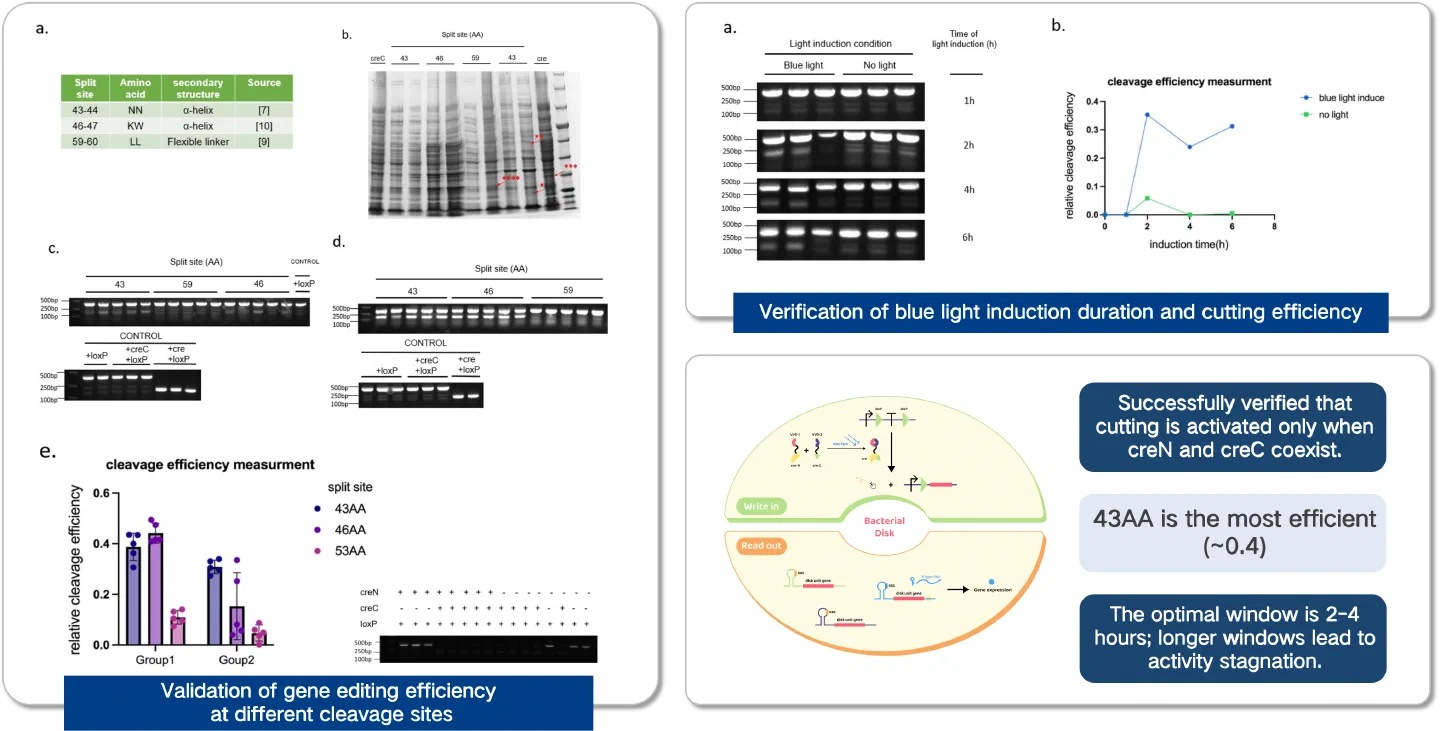
Genetic circuit design. I built dual orthogonal quorum-sensing circuits together with a blue-light-inducible split-Cre system, so pigment output can be switched programmably and reversibly.
Tools: GROMACS, LC-MS, SnapGene, GSMM, Python, R, optogenetics.
Results
- A vioE mutant with +32% activity, identified through semi-rational design and MD simulation.
- Two gene knockouts from genome-scale metabolic modelling, giving +48% and +23% yield improvements.
- Working programmable, reversible switching of pigment output via the combined quorum-sensing and blue-light split-Cre circuits.
Supported by a Provincial SRTP Research Grant (Zhejiang Provincial Department of Science and Technology, 12,000 RMB), and rated Outstanding.